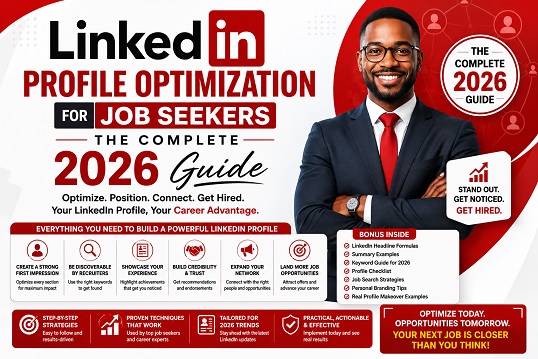
LinkedIn Profile Optimization for Job Seekers: The Complete 2026 Guide
Introduction
The job market has become increasingly digital, and employers no longer rely solely on traditional application documents such as Curriculum Vitae (CVs) and cover letters. Today, recruiters actively search for qualified candidates online, making a professional LinkedIn profile one of the most valuable career assets for job seekers.
Whether you are searching for a government job, private-sector employment, graduate trainee opportunity, internship, remote position, freelance contract, or international career, your LinkedIn profile can significantly influence how recruiters perceive your qualifications and professional potential.
Many Nigerian job seekers create LinkedIn accounts but never optimize them. Some profiles contain incomplete information, outdated work experience, poor photographs, weak headlines, or lack the keywords recruiters use during candidate searches. As a result, these profiles receive very little visibility and generate few employment opportunities.
A properly optimized LinkedIn profile functions as a digital professional portfolio. It showcases your qualifications, demonstrates credibility, highlights your achievements, expands your professional network, and increases your chances of being discovered by recruiters.
This comprehensive guide explains how job seekers can optimize their LinkedIn profiles in 2026 to improve visibility, attract recruiters, build professional credibility, and maximize employment opportunities.
What Is LinkedIn?
LinkedIn is a professional networking platform designed to connect employers, recruiters, professionals, business owners, students, and job seekers. Unlike social networking platforms primarily used for entertainment, LinkedIn focuses on:
- Professional networking
- Career development
- Recruitment
- Industry discussions
- Business opportunities
- Professional learning
Millions of employers use LinkedIn to identify and evaluate potential employees.
Why Every Job Seeker Needs a LinkedIn Profile
Many employers review LinkedIn profiles before inviting candidates for interviews. A professional profile helps employers verify:
- Educational qualifications
- Employment history
- Professional interests
- Industry involvement
- Career progression
Having a well-maintained profile demonstrates seriousness and professionalism.
Benefits of Optimizing Your LinkedIn Profile
A properly optimized profile offers several advantages.
These include:
Increased Recruiter Visibility
Recruiters can discover your profile more easily through LinkedIn searches.
Stronger Professional Credibility
A complete profile creates a positive impression.
Better Networking Opportunities
You can connect with professionals in your industry.
Career Development
LinkedIn provides access to learning resources and industry updates.
Job Opportunities
Many organizations advertise vacancies directly on LinkedIn.
Optimization increases your chances of benefiting from these opportunities.
Understanding How Recruiters Use LinkedIn
Recruiters typically search using keywords related to:
- Job titles
- Skills
- Industries
- Certifications
- Experience levels
- Locations
Candidates whose profiles contain relevant information are more likely to appear in search results.
Understanding recruiter behavior helps optimize profiles effectively.
LinkedIn Profile Optimization for Job Seekers: The Complete 2026 Guide
Start With a Professional Profile Photo
One of the first things visitors notice is the profile photograph. A professional photograph should be:
- Clear
- Recent
- High quality
- Well-lit
- Professionally dressed
Avoid:
- Group photographs
- Casual party pictures
- Blurry images
- Distracting backgrounds
- Excessive filters
Professional photographs improve credibility.
Create a Strong Headline
Many users leave the default headline unchanged.
This represents a missed opportunity.
Instead of simply listing your current status, create a headline that summarizes your professional identity.
Examples may include:
- Administrative Professional
- Civil Engineer
- Graduate Accountant
- Public Health Practitioner
- Human Resources Professional
A strong headline improves search visibility.
Customize Your LinkedIn URL
LinkedIn allows users to personalize profile URLs.
A customized URL:
- Appears more professional
- Is easier to share
- Enhances branding
Whenever possible, use your name or a professional variation.
Write an Effective About Section
The About section provides an opportunity to introduce yourself professionally.
This section should explain:
- Professional background
- Core competencies
- Career interests
- Major achievements
- Professional goals
Avoid copying your CV word for word.
Instead, write naturally while maintaining professionalism.
Highlight Relevant Skills
LinkedIn allows users to list professional skills. Examples include:
- Project management
- Data analysis
- Customer service
- Financial reporting
- Public administration
- Digital marketing
- Communication
- Leadership
Choose skills relevant to your target career.
Complete Your Work Experience
Many profiles contain incomplete employment histories. Each position should include:
- Organization
- Job title
- Employment dates
- Responsibilities
- Achievements
Whenever possible, emphasize accomplishments rather than simply listing duties.
Add Educational Qualifications
Educational information strengthens credibility.
Include:
- Institutions attended
- Degrees
- Diplomas
- Professional certificates
- Graduation years
Ensure information matches your CV.
Showcase Professional Certifications
Certifications demonstrate continuous learning.
Examples include:
- Professional licenses
- Technical certifications
- Industry training
- Leadership programs
Relevant certifications improve competitiveness.
Request Professional Recommendations
Recommendations provide social proof.
Strong recommendations often come from:
- Supervisors
- Colleagues
- Lecturers
- Mentors
- Professional associates
Authentic recommendations strengthen credibility.
LinkedIn Profile Optimization for Job Seekers: The Complete 2026 Guide
Obtain Skill Endorsements
Skill endorsements complement your listed competencies.
Although endorsements alone do not guarantee expertise, they reinforce professional reputation.
Add Volunteer Experience
Volunteer work demonstrates initiative and commitment.
Examples include:
- Community service
- Professional associations
- Non-governmental organizations
- Student leadership
Relevant volunteer experience enhances profiles.
Include Professional Projects
Projects demonstrate practical ability.
Where applicable, describe:
- Research projects
- Technical implementations
- Community initiatives
- Professional accomplishments
Projects provide evidence of competence.
Build a Strong Professional Network
Networking remains one of LinkedIn’s greatest advantages.
Connect with:
- Industry professionals
- Recruiters
- Alumni
- Colleagues
- Professional organizations
Meaningful networking creates career opportunities.
Follow Relevant Organizations
Following organizations helps users remain informed about:
- Vacancies
- Industry news
- Professional developments
- Recruitment opportunities
Choose organizations aligned with your career goals.
Use Keywords Strategically
LinkedIn’s search system relies heavily on keywords.
Incorporate relevant terms naturally throughout your profile.
Examples include:
- Financial analysis
- Software development
- Public administration
- Human resources
- Data science
- Healthcare management
Keyword optimization improves discoverability.
Keep Your Profile Updated
Many job seekers create profiles but fail to update them.
Regular updates should include:
- New employment
- Certifications
- Skills
- Achievements
- Projects
Understanding How LinkedIn’s Search System Works
One of the biggest misconceptions among job seekers is that simply creating a LinkedIn profile is enough to attract recruiters. In reality, LinkedIn’s search and recommendation systems prioritize profiles that are complete, relevant, active, and professionally presented.
Several factors influence profile visibility, including:
- Profile completeness
- Relevant keywords
- Professional experience
- Skills
- Activity level
- Network strength
- Engagement with professional content
The more complete and relevant your profile is, the greater your chances of appearing in recruiter searches.
Build a Strong Personal Brand
Your LinkedIn profile should communicate a consistent professional identity.
Personal branding is the process of presenting yourself as a professional with specific expertise, values, and career goals.
Your brand should answer questions such as:
- What industry do you work in?
- What skills define your expertise?
- What value do you bring to employers?
- What type of opportunities are you seeking?
Consistency across your profile strengthens credibility.
Write Experience Descriptions That Demonstrate Value
Many job seekers make the mistake of listing only job responsibilities.
Recruiters are usually more interested in achievements and measurable contributions.
Instead of describing only what you were assigned to do, explain:
- Problems you solved
- Improvements you made
- Projects you completed
- Results you achieved
- Skills you developed
Achievement-focused descriptions create stronger impressions.
LinkedIn Profile Optimization for Job Seekers: The Complete 2026 Guide
Optimize Your Skills Section
LinkedIn allows users to showcase professional skills that recruiters often search for.
Choose skills that genuinely reflect your experience and align with your target role.
Examples include:
Administrative Skills
- Office administration
- Record management
- Scheduling
Technical Skills
- Data analysis
- Programming
- Database management
Business Skills
- Project management
- Business development
- Financial reporting
Soft Skills
- Leadership
- Communication
- Teamwork
- Critical thinking
Review your skills periodically to ensure they remain relevant.
Use the Featured Section Effectively
The Featured section allows users to showcase important professional materials.
Depending on your experience, you can include:
- Portfolio samples
- Research publications
- Professional presentations
- Certifications
- Articles
- Project summaries
Only include materials that support your professional image.
Demonstrate Industry Engagement
Recruiters often pay attention to how candidates engage professionally on LinkedIn.
Constructive engagement may include:
- Commenting thoughtfully on industry discussions
- Sharing professional insights
- Celebrating career achievements
- Discussing emerging trends
- Participating in professional conversations
Quality engagement helps increase visibility.
Publish Professional Content
LinkedIn provides opportunities to publish original content.
Topics may include:
- Career development
- Industry trends
- Professional experiences
- Lessons learned
- Leadership insights
- Technology developments
Publishing valuable content positions you as an engaged professional.
Expand Your Professional Network Strategically
A large network alone does not guarantee opportunities.
Instead, focus on building meaningful professional relationships.
Connect with:
- Recruiters
- Hiring managers
- Industry professionals
- Alumni
- Professional associations
- Mentors
- Former colleagues
Personalized connection requests often produce better results than generic invitations.
Join Relevant Professional Groups
LinkedIn Groups provide opportunities to interact with professionals who share similar interests.
Benefits include:
- Industry discussions
- Learning opportunities
- Networking
- Career advice
- Recruitment announcements
Active participation increases professional visibility.
Enable the “Open to Work” Feature Carefully
LinkedIn offers an “Open to Work” feature that allows users to indicate interest in employment opportunities.
When using this feature:
- Specify preferred job titles.
- Select appropriate industries.
- Indicate preferred work arrangements where applicable.
- Keep information accurate.
Updating these preferences helps recruiters identify suitable candidates.
Build Credibility Through Recommendations
Recommendations differ from skill endorsements.
A recommendation provides written feedback describing your professionalism and work quality.
Strong recommendations often discuss:
- Integrity
- Leadership
- Technical ability
- Communication
- Teamwork
- Reliability
Quality recommendations strengthen trust.
Keep Your Activity Professional
Everything you publish contributes to your professional image.
Avoid content that may appear:
- Offensive
- Misleading
- Unprofessional
- Disrespectful
Instead, focus on content that reflects maturity and professionalism.
Common LinkedIn Mistakes Job Seekers Should Avoid
Many profiles fail to attract recruiters because of avoidable mistakes.
Incomplete Profiles
Missing information reduces credibility.
Generic Headlines
Weak headlines limit discoverability.
Poor Profile Photos
Unprofessional photographs create negative impressions.
Outdated Information
Old employment details reduce relevance.
Keyword Stuffing
Excessive repetition appears unnatural.
Copying the CV Exactly
Your LinkedIn profile should complement your CV, not duplicate it word for word.
Ignoring Networking
LinkedIn is designed for professional relationships.
Profiles with little engagement often receive less visibility.
LinkedIn Profile Optimization for Job Seekers: The Complete 2026 Guide
How Fresh Graduates Can Build Strong LinkedIn Profiles
Recent graduates often worry about limited work experience.
Fortunately, they can emphasize:
Academic Projects
Demonstrate practical knowledge.
Internships
Show workplace exposure.
Volunteer Experience
Highlight initiative.
Student Leadership
Demonstrate responsibility.
Certifications
Show commitment to learning.
Employers often value potential alongside experience.
Preparing Your Profile Before Applying for Jobs
Before submitting applications, review your profile carefully.
Confirm that:
- Contact information is correct.
- Employment history is current.
- Skills reflect your target role.
- Professional summary is updated.
- Certifications are included.
- Profile photo remains appropriate.
A complete review improves consistency.
How Recruiters Evaluate LinkedIn Profiles
Recruiters often review profiles for evidence of:
- Relevant experience
- Professional growth
- Communication ability
- Career progression
- Stability
- Industry involvement
They also compare LinkedIn information with submitted CVs.
Ensure consistency across all application documents.
Five Testimonies From Successful Job Seekers
Testimony 1: Chinedu From Enugu State
“My LinkedIn profile contained only basic information. After optimizing my headline, adding achievements, and expanding my network, I began receiving messages from recruiters.”
Testimony 2: Fatima From Kano State
“I started sharing professional insights related to my field. My profile became much more active, and recruiters viewed it more frequently.”
Testimony 3: Samuel From Abuja
“I realized my profile lacked keywords relevant to my profession. After updating my experience and skills, my search visibility improved.”
Testimony 4: Esther From Lagos State
“Adding recommendations from former supervisors strengthened my credibility. Recruiters seemed more confident about my experience.”
Testimony 5: Ibrahim From Port Harcourt
“I thought LinkedIn was only for experienced professionals. Once I included my internship, volunteer work, and certifications, I started connecting with employers and industry professionals.”
Frequently Asked Questions
Do I need work experience before creating a LinkedIn profile?
No. Students and recent graduates can include education, internships, volunteer work, projects, and certifications.
How often should I update my profile?
Review your profile whenever you gain new experience, complete training, earn certifications, or change employment.
Should my LinkedIn profile match my CV?
Yes. Information should be consistent, although LinkedIn can include additional professional details and accomplishments.
Is a profile photo necessary?
Yes. Professional profile photographs generally improve credibility and recruiter engagement.
Can recruiters contact me directly on LinkedIn?
Yes. Many recruiters use LinkedIn messaging to communicate with suitable candidates.
LinkedIn Profile Optimization for Job Seekers: The Complete 2026 Guide
Expert Tips for LinkedIn Success in 2026
Career development experts commonly recommend:
- Complete every important profile section.
- Use a professional photograph.
- Write a compelling headline.
- Optimize your professional summary.
- Include measurable achievements.
- Add relevant keywords naturally.
- Request recommendations.
- Build meaningful professional connections.
- Engage consistently with professional content.
- Keep your profile updated.
Future Trends in LinkedIn Recruitment
Professional networking continues to evolve.
Several important trends are shaping the future of recruitment.
Artificial Intelligence Matching
Recruiters increasingly rely on AI-assisted candidate searches.
Skills-Based Recruitment
Employers focus more on demonstrated competencies than job titles alone.
Digital Portfolios
Evidence of completed work is becoming increasingly valuable.
Remote Employment
LinkedIn continues to support growing remote work opportunities.
Professional Learning
Continuous skill development remains highly valued.
Job seekers who embrace these trends position themselves more competitively.
Long-Term Benefits of LinkedIn Optimization
Optimizing your LinkedIn profile is not only useful during active job searches.
A strong profile can support:
- Career advancement
- Professional networking
- Industry recognition
- Speaking opportunities
- Consulting opportunities
- Business partnerships
- Continuous learning
- Leadership development
Maintaining an optimized profile provides lasting professional value.
Conclusion
LinkedIn has evolved from a simple networking platform into one of the world’s most important recruitment and professional branding tools.
For Nigerian job seekers and professionals worldwide, a well-optimized LinkedIn profile can significantly improve visibility, strengthen credibility, and increase access to career opportunities.
Success on LinkedIn requires more than creating an account. It involves presenting your qualifications professionally, demonstrating expertise, engaging meaningfully with your industry, and continuously updating your profile as your career develops.
In today’s competitive employment market, every job seeker should treat LinkedIn as an essential part of their career strategy. A professionally optimized profile complements your CV, strengthens your online presence, and helps recruiters understand your qualifications beyond traditional application documents.
By applying the strategies discussed throughout this guide creating a compelling headline, writing a strong professional summary, highlighting achievements, using relevant keywords, building meaningful connections, requesting recommendations, and maintaining consistent professional engagement you can greatly improve your chances of attracting recruiters and securing employment opportunities.
Remember that LinkedIn optimization is an ongoing process rather than a one-time task. As your experience, skills, and career goals evolve, your profile should evolve as well. Continuous improvement and professional engagement will help ensure that your LinkedIn presence remains a valuable asset throughout your career journey.