How to Prepare for Virtual Job Interviews: A Complete Guide for Job Seekers in 2026

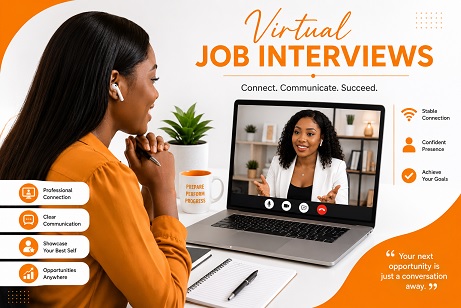
How to Prepare for Virtual Job Interviews: A Complete Guide for Job Seekers in 2026
Introduction
The recruitment landscape has changed dramatically over the past few years. While traditional face-to-face interviews remain important, virtual job interviews have become a standard part of hiring processes across Nigeria and around the world.
Today, employers conduct interviews through video conferencing platforms, online meeting applications, and digital recruitment systems to save time, reduce costs, and connect with candidates regardless of location.
Whether you are applying for a government position, private-sector job, remote role, internship, graduate trainee program, or international employment opportunity, there is a strong possibility that your first interview will take place online.
Unfortunately, many qualified candidates lose excellent opportunities because they fail to prepare properly for virtual interviews. Technical problems, poor communication, unprofessional environments, weak internet connections, and inadequate preparation often prevent candidates from presenting themselves effectively.
The good news is that virtual interview success is not based on luck. With the right preparation strategy, job seekers can perform confidently, create strong impressions, and significantly improve their chances of securing employment.
This comprehensive guide explains everything you need to know about preparing for virtual job interviews in 2026.
Why Virtual Interviews Have Become So Popular
Organizations increasingly prefer virtual interviews for several reasons.
Reduced Recruitment Costs
Virtual interviews eliminate many travel-related expenses.
Faster Hiring Processes
Recruiters can interview candidates more efficiently.
Wider Candidate Reach
Employers can assess applicants from different cities, states, and countries.
Scheduling Flexibility
Virtual platforms make scheduling easier.
Improved Recruitment Efficiency
Organizations can conduct multiple interviews in shorter periods.
Because of these advantages, virtual interviews are likely to remain an important part of recruitment for years to come.
Understanding the Difference Between Virtual and Physical Interviews
Many candidates mistakenly assume virtual interviews require the same preparation as traditional interviews.
While both formats assess similar qualities, virtual interviews introduce additional factors.
Examples include:
- Internet connectivity
- Device performance
- Video quality
- Audio quality
- Background appearance
- Digital communication skills
Understanding these differences is essential.
How to Prepare for Virtual Job Interviews: A Complete Guide for Job Seekers in 2026
Research the Organization Thoroughly
One of the most important preparation steps involves researching the employer.
Candidates should understand:
Organizational Background
Learn about the institution’s history and mission.
Products or Services
Understand what the organization does.
Industry Position
Research its role within the industry.
Recent Developments
Review recent projects, achievements, or announcements.
Organizational Values
Understand the culture and priorities.
This knowledge demonstrates genuine interest and professionalism.
Understand the Job Description
Many candidates attend interviews without carefully studying the vacancy announcement.
This is a serious mistake.
Review:
- Job responsibilities
- Required qualifications
- Desired skills
- Organizational expectations
Understanding the role helps candidates provide more relevant responses.
Prepare Your Professional Introduction
Most interviews begin with a simple request:
“Tell us about yourself.”
Despite its simplicity, this question often creates difficulties for candidates.
A strong introduction should briefly cover:
Professional Background
Your education and experience.
Key Skills
Relevant competencies.
Career Achievements
Important accomplishments.
Interest in the Position
Why you are applying.
Preparation improves confidence and clarity.
Review Your CV Thoroughly
Recruiters frequently ask questions based on information contained in your CV.
Candidates should be prepared to discuss:
- Educational qualifications
- Employment history
- Skills
- Certifications
- Projects
- Achievements
Never assume recruiters will focus only on recent experiences.
Anticipate Common Interview Questions
Preparation becomes easier when candidates anticipate likely questions.
Examples include:
Tell Us About Yourself
A common opening question.
Why Do You Want This Job?
Assesses motivation.
Why Should We Hire You?
Evaluates self-awareness and suitability.
What Are Your Strengths?
Identifies competencies.
What Are Your Weaknesses?
Assesses honesty and self-improvement.
Describe a Challenge You Have Faced
Evaluates problem-solving abilities.
Practicing responses improves performance.
Prepare Questions for the Interviewers
Interviews are not one-sided conversations.
Recruiters often ask:
“Do you have any questions for us?”
Thoughtful questions demonstrate interest.
Examples include questions regarding:
- Training opportunities
- Career development
- Team structure
- Organizational goals
Avoid asking questions that could have been answered through basic research.
How to Prepare for Virtual Job Interviews: A Complete Guide for Job Seekers in 2026
Test Your Technology Early
Technology failures are among the most common causes of virtual interview problems.
Candidates should test equipment before the interview day.
Internet Connection
Ensure stable connectivity.
Camera
Verify video quality.
Microphone
Check audio clarity.
Speakers or Headphones
Confirm functionality.
Software Platforms
Become familiar with the interview application.
Testing reduces the likelihood of last-minute problems.
Choose the Right Device
Although smartphones may be convenient, larger devices often provide better experiences.
Options include:
Laptop Computers
Often ideal for virtual interviews.
Desktop Computers
Provide stable performance.
Tablets
Can work effectively when properly configured.
The chosen device should be reliable and comfortable to use.
Create a Professional Interview Environment
Your surroundings influence interviewer perceptions.
The interview environment should be:
- Quiet
- Clean
- Organized
- Well-lit
- Free from distractions
Professional environments help create positive impressions.
Pay Attention to Lighting
Poor lighting can affect visibility.
Candidates should ensure their faces are clearly visible.
Natural lighting often works well.
Proper lighting improves video quality and professionalism.
Select an Appropriate Background
Backgrounds communicate professionalism.
Avoid:
- Cluttered spaces
- Distracting decorations
- Excessive movement
- Noisy environments
Simple and professional backgrounds are generally best.
Dress Professionally
Some candidates mistakenly believe virtual interviews require less professional attire.
Recruiters still evaluate appearance.
Appropriate attire demonstrates:
- Respect
- Seriousness
- Professionalism
Dress as you would for an in-person interview.
Practice Speaking Clearly
Communication quality matters greatly during virtual interviews.
Candidates should focus on:
Clear Pronunciation
Ensure words are understandable.
Appropriate Pace
Avoid speaking too quickly.
Confidence
Communicate with assurance.
Professional Language
Maintain professionalism throughout.
Strong communication creates positive impressions.
Master Non-Verbal Communication
Virtual interviews involve more than words.
Recruiters also observe:
- Facial expressions
- Eye contact
- Posture
- Confidence
Non-verbal communication influences perceptions significantly.
Maintain Eye Contact
Eye contact remains important in virtual settings.
Candidates should look toward the camera rather than constantly viewing themselves on the screen.
This creates stronger engagement.
Eliminate Potential Distractions
Before the interview:
- Silence phones.
- Inform household members.
- Close unnecessary applications.
- Disable notifications.
Distractions can disrupt concentration and professionalism.
Practice Through Mock Interviews
Mock interviews provide valuable preparation opportunities.
Benefits include:
- Improved confidence
- Better communication
- Reduced anxiety
- Increased familiarity
Regular practice helps candidates identify areas for improvement.
Learn to Handle Technical Problems Calmly
Even with preparation, technical issues may occur.
Employers generally understand occasional technical difficulties.
The key is remaining calm and professional.
Candidates should have backup plans whenever possible.
Understanding What Recruiters Evaluate During Virtual Interviews
Many candidates believe interviewers focus only on the answers they provide. While answers are important, recruiters often evaluate a much broader range of qualities.
During virtual interviews, recruiters typically assess:
- Communication skills
- Professionalism
- Confidence
- Problem-solving ability
- Technical competence
- Adaptability
- Critical thinking
- Cultural fit
- Leadership potential
- Emotional intelligence
Understanding these evaluation criteria allows candidates to prepare more effectively.
How to Build Confidence Before a Virtual Interview
Confidence plays a major role in interview performance.
Candidates who appear confident often communicate more effectively and create stronger impressions.
Confidence can be developed through preparation rather than natural talent alone.
Effective confidence-building strategies include:
Thorough Preparation
Knowledge reduces uncertainty.
Mock Interviews
Practice improves familiarity.
Reviewing Achievements
Remembering past successes increases self-belief.
Positive Self-Talk
Avoid negative assumptions.
Professional Preparation
Knowing that you are well prepared creates reassurance.
Confidence should not be confused with arrogance. The goal is calm professionalism.
Managing Virtual Interview Anxiety
Even highly qualified candidates may experience nervousness before interviews.
Common symptoms include:
- Sweating
- Rapid heartbeat
- Difficulty concentrating
- Forgetfulness
- Excessive worry
Fortunately, anxiety can be managed.
Prepare Early
Last-minute preparation increases stress.
Practice Frequently
Familiarity reduces fear.
Sleep Well
Rest improves mental clarity.
Arrive Early
Joining the interview platform ahead of schedule reduces pressure.
Focus on the Conversation
Avoid obsessing about outcomes.
Many successful professionals still experience interview nerves. The difference is that they learn how to manage them effectively.
How to Prepare for Virtual Job Interviews: A Complete Guide for Job Seekers in 2026
Handling Difficult Interview Questions
Most interviews include challenging questions designed to assess thinking ability and composure.
Examples include:
Why Should We Hire You?
Focus on skills, experience, and value.
What Is Your Biggest Weakness?
Discuss a genuine weakness while demonstrating improvement efforts.
Why Did You Leave Your Previous Job?
Remain professional and avoid criticizing former employers.
Describe a Failure
Focus on lessons learned and growth.
Where Do You See Yourself in Five Years?
Show ambition while remaining realistic.
Preparation improves confidence when answering difficult questions.
Using the STAR Method Effectively
Many recruiters ask behavioral questions.
Examples include:
- Tell us about a challenge you faced.
- Describe a difficult situation.
- Give an example of leadership.
The STAR method provides a structured response framework.
Situation
Explain the context.
Task
Describe the responsibility.
Action
Explain what you did.
Result
Discuss the outcome.
Structured answers are often more persuasive and easier to understand.
Succeeding in Panel Interviews
Some virtual interviews involve multiple interviewers.
Panel interviews can appear intimidating because several individuals may ask questions.
To perform effectively:
Address All Panel Members
Acknowledge everyone professionally.
Listen Carefully
Ensure you understand each question.
Maintain Composure
Avoid becoming overwhelmed.
Engage Naturally
Treat the discussion as a professional conversation.
Panel interviews often assess communication and interpersonal skills.
Demonstrating Professionalism Online
Professional behavior remains essential during virtual interviews.
Examples include:
Punctuality
Join on time.
Courtesy
Treat everyone respectfully.
Attentiveness
Listen carefully.
Appropriate Language
Maintain professionalism.
Respect for Procedures
Follow instructions carefully.
Professional conduct contributes significantly to overall impressions.
Common Virtual Interview Mistakes Job Seekers Make
Many candidates unknowingly weaken their performance through avoidable mistakes.
Speaking Too Much
Long, unfocused answers may reduce clarity.
Better Approach
Provide concise and relevant responses.
Interrupting Interviewers
Interruptions can appear disrespectful.
Better Approach
Allow interviewers to complete their questions.
Reading Prepared Answers Word for Word
Over-rehearsed responses may sound unnatural.
Better Approach
Practice concepts rather than memorizing scripts.
Looking Distracted
Constantly checking phones or other screens reduces engagement.
Better Approach
Remain focused on the interview.
Failing to Research the Organization
Lack of organizational knowledge suggests insufficient preparation.
Better Approach
Conduct thorough research beforehand.
How to Discuss Salary Expectations
Salary discussions may arise during interviews.
When responding:
- Remain professional.
- Research industry standards.
- Consider organizational structures.
- Demonstrate flexibility where appropriate.
Avoid making salary the primary focus of the conversation.
Demonstrating Digital Competence
Because virtual interviews occur online, recruiters often gain indirect insights into digital skills.
Candidates demonstrate competence through:
- Effective use of technology
- Professional virtual communication
- Ability to navigate platforms
- Technical preparedness
Digital competence is increasingly valuable across many industries.
The Importance of Active Listening
Interview success depends not only on speaking but also on listening.
Active listening involves:
- Paying full attention
- Understanding questions fully
- Avoiding assumptions
- Responding appropriately
Candidates who listen carefully often provide stronger answers.
How to Prepare for Virtual Job Interviews: A Complete Guide for Job Seekers in 2026
Building Rapport During Virtual Interviews
Although virtual interactions feel different from face-to-face meetings, rapport remains important.
Ways to build rapport include:
Professional Friendliness
Be approachable.
Positive Attitude
Demonstrate enthusiasm.
Respectful Communication
Maintain professionalism.
Genuine Interest
Show curiosity about the organization.
Strong rapport helps create memorable impressions.
How to End a Virtual Interview Professionally
The closing moments are important.
Candidates should:
- Thank the interviewers.
- Express appreciation for the opportunity.
- Reaffirm interest in the role.
- Ask about next steps if appropriate.
Professional endings leave positive final impressions.
Following Up After the Interview
Many candidates overlook follow-up communication.
A professional follow-up can:
- Reinforce interest
- Demonstrate professionalism
- Maintain positive engagement
Follow-up messages should remain brief and respectful.
What to Do If You Perform Poorly
Not every interview will go perfectly.
Candidates should:
Evaluate Performance
Identify strengths and weaknesses.
Learn From Mistakes
Use lessons constructively.
Continue Applying
Avoid becoming discouraged.
Improve Preparation
Refine future strategies.
Every interview provides learning opportunities.
The Growing Importance of Virtual Interview Skills
Virtual communication is becoming increasingly important across many professions.
Employers value candidates who can:
- Communicate effectively online
- Collaborate remotely
- Adapt to digital environments
- Maintain professionalism virtually
Developing these skills provides long-term career benefits.
Five Testimonies From Successful Candidates
Testimony 1: Chinedu From Enugu State
“My first virtual interview was difficult because I focused entirely on technical preparation and ignored communication skills. After practicing mock interviews, my confidence improved significantly.”
Testimony 2: Fatima From Kano State
“I underestimated the importance of internet stability. During one interview, connection problems disrupted the conversation. Since then, I always test my setup beforehand.”
Testimony 3: Samuel From Abuja
“Researching the organization thoroughly helped me answer questions more confidently. Interviewers seemed impressed by my understanding of their work.”
Testimony 4: Esther From Lagos State
“I used the STAR method to answer behavioral questions. It helped me provide structured responses and communicate my experiences more effectively.”
Testimony 5: Ibrahim From Rivers State
“My biggest improvement came from practicing eye contact and communication. Small adjustments made me appear much more confident during interviews.”
Frequently Asked Questions
How early should I join a virtual interview?
Joining a few minutes early allows time to address any technical issues and settle comfortably.
What should I wear for a virtual interview?
Dress professionally, just as you would for a face-to-face interview.
Can I use my smartphone?
While possible, laptops and desktop computers generally provide better experiences.
What should I do if technical problems occur?
Remain calm, communicate professionally, and follow any instructions provided by interviewers.
Should I memorize answers?
No. Focus on understanding key points and practicing natural responses.
Expert Recommendations for Virtual Interview Success
Career experts commonly recommend:
- Research the organization thoroughly.
- Practice common interview questions.
- Test technology in advance.
- Prepare a professional environment.
- Dress appropriately.
- Maintain eye contact.
- Communicate clearly.
- Listen actively.
- Remain calm under pressure.
- Follow up professionally.
Future Trends in Virtual Recruitment
Recruitment continues to evolve.
Several trends are becoming increasingly common.
Artificial Intelligence Integration
AI tools may assist interview evaluation.
Hybrid Recruitment Models
Organizations may combine virtual and physical assessments.
Skills-Based Interviews
Practical demonstrations may become more common.
Global Recruitment
Employers increasingly consider candidates from broader geographical areas.
Digital Communication Assessment
Virtual professionalism may receive greater attention.
Candidates should remain adaptable and continuously improve their communication skills.
Why Preparation Remains the Ultimate Advantage
Many applicants search for shortcuts to interview success.
However, the most reliable advantage remains preparation. Prepared candidates are generally:
- More confident
- Better informed
- More composed
- More persuasive
- More professional
Preparation transforms uncertainty into readiness.
Final Thoughts
Virtual interviews have become a permanent feature of modern recruitment. While they present unique challenges, they also provide opportunities for candidates to showcase professionalism, communication skills, and adaptability.
Success in virtual interviews depends largely on preparation. Candidates who invest time in researching employers, practicing responses, testing technology, improving communication, and creating professional environments place themselves in stronger positions than those who rely on improvisation.
Conclusion
Preparing for a virtual job interview in 2026 requires more than simply logging into a video call. It involves strategic preparation, technical readiness, professional presentation, and effective communication.
The most successful candidates approach virtual interviews with the same seriousness they would bring to traditional face-to-face meetings. They prepare thoroughly, remain professional, and focus on demonstrating value to potential employers.
By applying the strategies discussed in this guide, job seekers can improve their confidence, strengthen their interview performance, and increase their chances of securing employment opportunities.
Remember that every virtual interview represents an opportunity to demonstrate not only your qualifications but also your professionalism, adaptability, and readiness for the modern workplace. The better you prepare, the greater your chances of turning that opportunity into a successful career outcome.