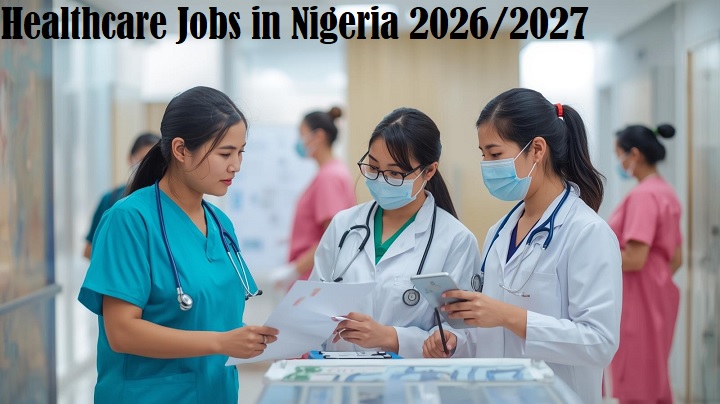
Healthcare Jobs in Nigeria 2026/2027
Healthcare in Nigeria is no longer just a public service sector; it is now one of the most strategically important employment ecosystems in the country. Between increasing population growth, rising disease burden, private hospital expansion, telemedicine growth, donor-funded health programs, and ongoing migration of professionals abroad, the demand-supply imbalance has created both opportunities and structural challenges.
For 2026/2027, healthcare jobs in Nigeria will not disappear. Instead, they will evolve. The professionals who will secure stable, well-paying positions are those who understand:
-
How federal and state recruitment systems operate
-
How salary structures are determined
-
How licensing bodies regulate employment eligibility
-
Where private sector demand is strongest
-
How NGOs recruit healthcare professionals
-
What documentation is required
-
What mistakes commonly disqualify applicants
-
How to strategically position themselves for long-term growth
This is not a surface-level overview. This is a fully developed, practical, career-focused guide written specifically for Nigerian healthcare graduates, NYSC members, early-career professionals, and mid-level practitioners preparing for 2026/2027 recruitment cycles.
Understanding the Nigerian Healthcare Employment Structure
Healthcare jobs in Nigeria are distributed across five major pillars:
-
Federal Government Health Institutions
-
State Government Hospitals and Agencies
-
Pharmaceutical and Diagnostic Industries
-
NGOs and International Health Programs
Each pillar operates differently in terms of recruitment procedures, salary scale, job stability, and career progression.
Major federal oversight bodies include the Federal Ministry of Health Nigeria and the National Primary Health Care Development Agency. These institutions influence policy direction and sometimes coordinate large-scale recruitment approvals.
Understanding how these structures interact is essential before applying anywhere.
Major Healthcare Professions and Their 2026/2027 Outlook
Medical Doctors in Nigeria
Medical doctors remain central to the healthcare workforce. Despite migration trends, demand for doctors in teaching hospitals, federal medical centres, state hospitals, and private facilities remains high.
To legally practice, doctors must be licensed by the Medical and Dental Council of Nigeria. Without active registration, no legitimate employer will process appointment.
Employment Categories for Doctors
-
House Officers
-
Medical Officers
-
Resident Doctors
-
Consultants
-
Private General Practitioners
-
NGO Program Doctors
Salary Structure
Federal and teaching hospital doctors are paid under CONMESS (Consolidated Medical Salary Structure). Salary increases are based on grade level and years of service.
Private hospital salaries vary significantly. Large urban hospitals may pay competitively, while smaller facilities often pay lower wages.
NGOs sometimes offer higher consolidated salaries, especially in donor-funded disease programs.
Recruitment Pattern
Government recruitment for doctors is not continuous. It depends on budgetary approval and federal authorization. Teaching hospitals such as University College Hospital Ibadan and Lagos University Teaching Hospital publish vacancy notices when clearance is granted. Private hospitals recruit year-round.
Nursing and Midwifery Jobs
The migration of nurses to the UK, Canada, and other countries has increased domestic vacancies.
Nurses must be licensed by the Nursing and Midwifery Council of Nigeria.
Where Nurses Are Needed
-
Federal medical centres
-
State hospitals
-
Private hospitals
-
Maternity centres
-
NGOs (maternal and child health programs)
-
Home care agencies
Salary Expectations
Government nurses are paid under CONHESS (Consolidated Health Salary Structure). Entry-level salary depends on qualification level (diploma vs degree).
Private hospital salaries vary widely by city.
Urban centres like Lagos and Abuja generally pay higher wages compared to smaller states.
Medical Laboratory Scientists
Diagnostic testing demand has increased significantly since the COVID-19 era. Laboratory services remain essential in both urban and semi-urban Nigeria.
Registration with the Medical Laboratory Science Council of Nigeria is mandatory.
Employment Areas
-
Teaching hospitals
-
Federal medical centres
-
Private diagnostic laboratories
-
Research institutions
-
NGO disease surveillance programs
Recruitment is competitive, particularly in major cities.
Pharmacists
Pharmacists operate in both clinical and industrial sectors.
They must be licensed by the Pharmacists Council of Nigeria.
Career Paths
-
Hospital pharmacist
-
Community pharmacy owner
-
Pharmaceutical sales representative
-
Regulatory officer
-
Manufacturing and quality control
Private pharmaceutical companies often provide structured career progression.
Radiographers and Imaging Specialists
With diagnostic imaging expansion, radiographers remain relevant. Licensing is under the Radiographers Registration Board of Nigeria.
Private diagnostic centres are expanding in cities like Lagos and Port Harcourt.
Community Health Extension Workers (CHEWs)
CHEWs form the backbone of rural healthcare delivery.
The National Primary Health Care Development Agency coordinates many primary healthcare initiatives.
Demand remains consistent, especially in rural deployments.
NGO and Donor-Funded Healthcare Jobs
Nigeria continues to receive international funding for:
-
HIV programs
-
Malaria control
-
Maternal and child health
-
Immunization programs
-
Nutrition interventions
These programs recruit:
-
Public health officers
-
Monitoring and evaluation officers
-
Program coordinators
-
Data analysts
-
Field supervisors
NGO recruitment processes are often transparent and merit-based.
Experience in data reporting and community engagement improves chances.
Required Documents for Healthcare Job Applications (2026/2027)
Serious applicants must prepare:
-
Academic certificates
-
Professional license certificate
-
Practicing license (current year)
-
NYSC discharge or exemption certificate
-
Birth certificate or age declaration
-
Means of identification
-
Curriculum Vitae
-
Reference letters
Failure to provide updated license is one of the most common disqualification reasons.
Geographic Hotspots for Healthcare Employment
Healthcare job concentration is highest in:
-
Lagos
-
Abuja
-
Rivers State
-
Oyo State
-
Kano State
Teaching hospitals like University College Hospital Ibadan remain major employers due to size and specialization diversity.
Common Mistakes Healthcare Job Seekers Make
-
Allowing professional license to expire
-
Applying without tailoring CV to healthcare standards
-
Ignoring rural postings
-
Relying only on government recruitment
-
Submitting incomplete documentation
-
Refusing entry-level roles
Strategic flexibility increases employment chances.
Real-Life Testimonies
Testimony 1: Nurse in Abuja
A registered nurse waited for federal recruitment that did not materialize for over a year. Eventually, she accepted a private hospital role, gained two years of experience, and later secured a government appointment.
Lesson: Experience builds eligibility.
Testimony 2: Laboratory Scientist in Port Harcourt
After NYSC, he volunteered in a diagnostic centre for six months. That unpaid experience later qualified him for a permanent laboratory role.
Lesson: Strategic volunteering can convert into employment.
Testimony 3: Public Health Officer with NGO
Applied to a malaria intervention project coordinated through federal programs. Her data analysis skills gave her advantage over purely clinical candidates.
Lesson: Technical skills matter.
Frequently Asked Questions
Are healthcare jobs in Nigeria still available in 2026/2027?
Yes. Migration has created vacancies, especially in nursing and laboratory science.
Is government employment better than private?
Government jobs offer stability; private sector may offer faster recruitment and performance-based growth.
Do NGOs pay more?
Some international NGOs offer competitive consolidated salaries.
Understanding Government Salary Structures (CONMESS and CONHESS)
Healthcare salaries in federal and many state institutions are guided by structured pay frameworks.
CONMESS – Consolidated Medical Salary Structure
CONMESS applies primarily to:
-
Medical doctors
-
Dentists
Under CONMESS, salaries are determined by:
-
Grade level
-
Step level (years of service)
-
Professional progression (Medical Officer → Registrar → Senior Registrar → Consultant)
Doctors employed in federal institutions under the supervision of the Federal Ministry of Health Nigeria follow this structure.
Allowances may include:
-
Call duty allowance
-
Hazard allowance
-
Teaching allowance (for academic roles)
-
Rural posting incentives (in some states)
Consultants earn significantly higher than entry-level medical officers.
CONHESS – Consolidated Health Salary Structure
CONHESS applies to:
-
Nurses
-
Pharmacists
-
Medical Laboratory Scientists
-
Radiographers
-
Physiotherapists
-
Health Information Managers
-
Community Health Officers
Salary levels depend on:
-
Qualification (Diploma vs Degree vs Masters)
-
Years of service
-
Promotions
-
Special postings
Professionals regulated by bodies such as the Nursing and Midwifery Council of Nigeria and the Medical Laboratory Science Council of Nigeria typically fall under CONHESS in government employment.
Healthcare Jobs in Nigeria 2026/2027
Step-by-Step Federal Recruitment Process (2026/2027)
Government healthcare recruitment follows a structured administrative chain.
Step 1: Vacancy Approval
A hospital such as University College Hospital Ibadan must receive clearance to recruit.
Step 2: Official Advertisement
Vacancies are published through:
-
National newspapers
-
Official institutional portals
-
Federal circulars
Step 3: Application Submission
Applicants submit:
-
Curriculum Vitae
-
Certified copies of credentials
-
Professional license
-
NYSC certificate
Incomplete submissions are automatically disqualified.
Step 4: Shortlisting
Shortlisting may consider:
-
Qualification relevance
-
Years of experience
-
Specialty needs
-
Federal character principles
Step 5: Interview
Candidates are assessed on:
-
Technical knowledge
-
Ethical understanding
-
Communication skills
-
Professional conduct
Step 6: Appointment Letter
Successful candidates receive formal employment letters and are placed on appropriate grade level.
Private Hospital Recruitment Dynamics
Private hospitals operate differently.
Recruitment may be:
-
Direct walk-in
-
Referral-based
-
Advertised online
-
Conducted through recruitment agencies
Private employers focus heavily on:
-
Practical skills
-
Work ethic
-
Shift flexibility
-
Immediate availability
While salaries vary, high-capacity private hospitals in Lagos, Abuja, and Port Harcourt may offer competitive packages.
However, smaller facilities may offer lower wages but provide experience.
Strategic insight: many government employees started in private hospitals before transitioning.
NGO Healthcare Recruitment in Nigeria
NGOs funded by international donors run programs in:
-
HIV prevention
-
Tuberculosis control
-
Malaria elimination
-
Maternal health
-
Nutrition programs
The National Primary Health Care Development Agency often collaborates with such programs.
Recruitment Process
-
Vacancy announcement
-
Online application
-
Technical assessment
-
Panel interview
Skills valued:
-
Data reporting
-
Monitoring & evaluation
-
Community mobilization
-
Grant compliance understanding
NGO salaries may be project-based but can be competitive.
Career Progression Pathways
Doctors
Medical Officer → Registrar → Senior Registrar → Consultant → Medical Director
Additional qualifications (e.g., residency training) significantly increase earning power.
Nurses
Staff Nurse → Senior Nurse → Nursing Officer → Principal Nursing Officer → Director of Nursing
Advanced certifications improve progression speed.
Laboratory Scientists
Intern → Scientist I → Scientist II → Senior Scientist → Chief Scientist
Research publications and specialization matter.
Entrepreneurship Opportunities in Healthcare
Healthcare is not limited to employment.
Professionals can establish:
-
Private clinics (subject to regulation)
-
Diagnostic laboratories
-
Pharmacy outlets
-
Home care services
-
Telemedicine platforms
Licensing from appropriate councils such as the Pharmacists Council of Nigeria is mandatory for pharmacy operations.
Entrepreneurship requires capital and regulatory compliance but offers long-term independence.
Migration vs Staying in Nigeria (2026/2027 Reality)
Many Nigerian healthcare professionals migrate.
However, migration involves:
-
Licensing exams
-
Credential verification
-
Financial cost
-
Waiting periods
Some professionals build strong local careers before migrating.
Strategic approach:
Gain 2–3 years experience locally before pursuing international opportunities.
Healthcare Jobs in Nigeria 2026/2027
Financial Reality: Cost of Living vs Salary
Healthcare workers must realistically assess:
-
Rent costs in major cities
-
Transport
-
Professional license renewal fees
-
Continuing education expenses
Urban centres offer higher salaries but higher living costs.
Rural postings may offer lower living expenses and sometimes incentives.
Extended Real-Life Testimonies
Testimony 4 – Doctor in Ibadan
After completing residency training, he remained in Nigeria despite migration offers. He combined hospital work with part-time private practice, increasing income stability.
Lesson: Multiple income streams strengthen financial security.
Testimony 5 – Pharmacist in Lagos
Started in a hospital pharmacy, then opened a small retail outlet after five years. Careful compliance with regulatory standards ensured sustainability.
Lesson: Experience before entrepreneurship reduces failure risk.
Testimony 6 – Public Health Professional in NGO
Transitioned from volunteer data officer to full project coordinator within four years by acquiring monitoring and evaluation certification.
Lesson: Skill upgrading accelerates career growth.
Frequently Asked Questions
Are government healthcare jobs guaranteed every year?
No. Recruitment depends on budget approval and political decisions.
Is private sector less secure?
It may offer less job security but faster hiring and skill exposure.
Do NGOs provide long-term employment?
Some contracts are project-based, but strong performers are often retained.
Which profession has strongest demand in 2026/2027?
Nursing, laboratory science, and public health roles show steady demand.
Final Strategic Conclusion
Healthcare jobs in Nigeria for 2026/2027 remain viable and strategically important. While migration continues to affect workforce numbers, domestic healthcare demand is rising due to population growth and expanding private investment.
Success in this sector requires:
-
Active professional licensing
-
Strategic application diversification
-
Continuous skill development
-
Flexibility in job location
-
Realistic financial planning
Healthcare professionals who position themselves intelligently will not only secure employment but build resilient careers capable of adapting to Nigeria’s evolving healthcare landscape.