Full List of Federal Universities in Nigeria & 2025/2026 School Fees Guide

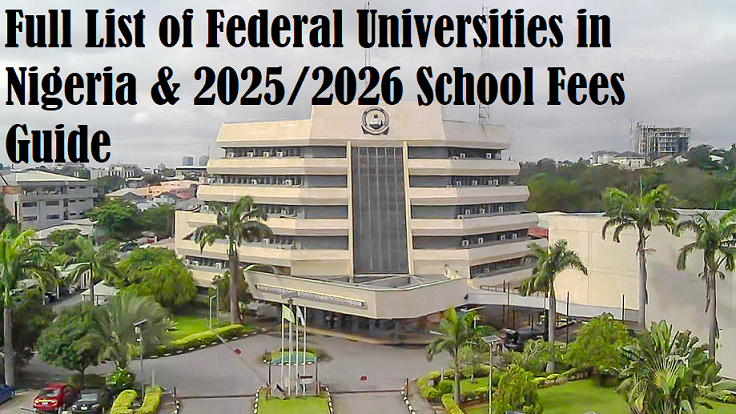
Full List of Federal Universities in Nigeria & 2025/2026 School Fees Guide
Introduction
Education in Nigeria has undergone remarkable expansion, especially in the federal university sector. With over 70 federally recognized universities as of 2025, aspiring undergraduates, postgraduates, and international students need clear guidance on tuition fees, admission processes, and program structures. This article provides a comprehensive overview of all federal universities in Nigeria and their 2025/2026 school fees, along with practical advice on budgeting, course selection, and student responsibilities.
Understanding these fees is crucial for proper planning and financial management. Whether you are a Nigerian student, an international applicant, or a parent, this guide will give you detailed insights into the cost of education across the federal university system, helping you make informed decisions.
Overview of Federal Universities in Nigeria
Federal universities are institutions funded and operated by the Nigerian federal government, often through the Ministry of Education and regulated by the National Universities Commission (NUC). These universities aim to provide:
-
Affordable and high-quality education for Nigerian students.
-
Specialized programs in medicine, agriculture, engineering, technology, education, and the arts.
-
Research opportunities that address national development goals.
-
Opportunities for international students and collaboration.
Federal universities typically charge lower tuition than private universities but vary widely based on faculty, location, and infrastructure needs.
Importance and Relevance in 2025/2026
As Nigeria enters 2025/2026, higher education costs are evolving due to inflation, energy costs, and facility maintenance. Federal universities remain the most affordable yet reputable option for Nigerian youths, particularly for families with limited budgets.
The relevance of this guide is:
-
Helping students budget accurately for tuition and ancillary costs.
-
Highlighting universities with affordable vs high-cost programs, particularly for professional courses.
-
Guiding students to make strategic choices for admissions based on their program of interest and financial capacity.
Federal Universities: History and Background
The Nigerian federal university system started with University of Ibadan (UI) in 1948, initially affiliated with the University of London. Since then:
-
Federal universities expanded from a few pioneering institutions to over 70 universities nationwide.
-
Key milestones include the establishment of specialized institutions like FUPRE (Petroleum Resources), NOUN (Distance Learning), and the growing network of Federal University of Health Sciences.
-
The NUC ensures quality control, accreditation, and adherence to national education standards.
Full List of Federal Universities in Nigeria & 2025/2026 School Fees Guide
Purpose and Objectives
The federal university system serves to:
-
Provide high-quality tertiary education accessible to all Nigerian citizens.
-
Promote research and innovation in critical sectors (health, technology, agriculture).
-
Train professionals in high-demand fields such as medicine, engineering, law, agriculture, and education.
-
Support national development through knowledge creation and skilled human capital.
List of Federal Universities in Nigeria (2025/2026)
Below is the comprehensive list of 74 federal universities recognized by the NUC, including practical 2025/2026 tuition ranges:
1–20: Early Established and Specialized Universities
-
Abubakar Tafawa Balewa University (ATBU), Bauchi — ₦30,000 – ₦60,000
-
Ahmadu Bello University (ABU), Zaria — ₦50,000 – ₦110,000
-
Bayero University Kano (BUK), Kano — ₦50,000 – ₦120,000
-
Federal University Gashua (FUGashua), Yobe — ₦35,000 – ₦80,000
-
Federal University of Petroleum Resources, Effurun (FUPRE) — ₦67,000 – ₦130,000
-
Federal University of Technology, Akure (FUTA) — ₦60,000 – ₦220,000
-
Federal University of Technology, Minna (FUTMINNA) — ₦48,000 – ₦95,000
-
Federal University of Technology, Owerri (FUTO) — ₦50,000 – ₦160,000
-
Federal University, Dutse (FUD), Jigawa — ₦35,000 – ₦90,000
-
Federal University, Dutsin-Ma (FUDutsin-Ma), Katsina — ₦35,000 – ₦90,000
-
Federal University, Kashere, Gombe — ₦35,000 – ₦90,000
-
Federal University, Lafia (FULafia), Nasarawa — ₦40,000 – ₦95,000
-
Federal University, Lokoja (FULokoja), Kogi — ₦40,000 – ₦95,000
-
Alex Ekwueme Federal University Ndufu-Alike Ikwo (AE-FUNAI), Ebonyi — ₦45,000 – ₦95,000
-
Federal University Otuoke (FUOTUOKE), Bayelsa — ₦40,000 – ₦95,000
-
Federal University Oye-Ekiti (FUOYE), Ekiti — ₦40,000 – ₦110,000
-
Federal University Wukari (FUWUKARI), Taraba — ₦35,000 – ₦90,000
-
Federal University Birnin Kebbi (FUBK) — ₦40,000 – ₦95,000
-
Federal University Gusau (FUGUSAU), Zamfara — ₦35,000 – ₦90,000
-
Michael Okpara University of Agriculture, Umudike (MOUAU) — ₦45,000 – ₦120,000
21–40: Technology, Open, and Military Institutions
-
Modibbo Adama University of Technology (MAUTECH), Yola — ₦50,000 – ₦140,000
-
National Open University of Nigeria (NOUN), Abuja — ₦20,000 – ₦100,000
-
Nigeria Police Academy, Wudil — ₦30,000 – ₦80,000
-
Nigerian Defence Academy (NDA), Kaduna — specialized cadet fees
-
Nnamdi Azikiwe University (UNIZIK), Awka — ₦45,000 – ₦120,000
-
Obafemi Awolowo University (OAU), Ile-Ife — ₦45,000 – ₦120,000
-
University of Abuja (UNIABUJA), Gwagwalada — ₦50,000 – ₦120,000
-
Federal University of Agriculture, Abeokuta (FUNAAB) — ₦85,000 – ₦170,000
-
Joseph Sarwuan Tarka University, Makurdi (JSTUM) — ₦40,000 – ₦95,000
-
University of Benin (UNIBEN) — ₦45,000 – ₦120,000
-
University of Calabar (UNICAL) — ₦45,000 – ₦110,000
-
University of Ibadan (UI) — ₦50,000 – ₦200,000
-
University of Ilorin (UNILORIN) — ₦45,000 – ₦120,000
-
University of Jos (UNIJOS) — ₦45,000 – ₦120,000
-
University of Lagos (UNILAG) — ₦70,000 – ₦200,000
-
University of Maiduguri (UNIMAID) — ₦45,000 – ₦110,000
-
University of Nigeria, Nsukka (UNN) — ₦45,000 – ₦120,000
-
University of Port Harcourt (UNIPORT) — ₦75,000 – ₦214,000+
-
University of Uyo (UNIUYO) — ₦40,000 – ₦110,000
-
Usmanu Danfodiyo University (UDUSOK), Sokoto — ₦40,000 – ₦110,000
Full List of Federal Universities in Nigeria & 2025/2026 School Fees Guide
41–60: Maritime, Health, and Education Focused Universities
-
Nigerian Maritime University, Okerenkoko, Delta — ₦80,000 – ₦200,000
-
Air Force Institute of Technology (AFIT), Kaduna — check portal
-
Nigerian Army University, Biu (NAUB) — check portal
-
Federal University of Health Sciences, Otukpo (Benue) — ₦80,000 – ₦220,000
-
Federal University of Agriculture, Zuru (FUNA Zuru), Kebbi — ₦40,000 – ₦110,000
-
Federal University of Technology, Babura (Jigawa) — ₦40,000 – ₦110,000
-
Federal University of Technology, Ikot Abasi (Akwa Ibom) — ₦40,000 – ₦120,000
-
Federal University of Health Sciences, Azare (Bauchi) — ₦80,000 – ₦220,000
-
Federal University of Health Sciences, Ila-Orangun (Osun) — ₦80,000 – ₦220,000
-
David Nweze Umahi Federal University of Medical Sciences, Uburu — check portal
-
Admiralty University, Ibusa — check portal
-
Federal University of Transportation, Daura (FUTD) — check portal
-
African Aviation and Aerospace University — check portal
-
National University of Science and Technology (Abuja) — check portal
-
Federal University of Agriculture Bassam-Biri, Bayelsa — check portal
-
Federal University of Health Sciences, Kwale (Delta) — check portal
-
Federal University of Health Sciences, Katsina — check portal
-
Federal University of Agriculture, Mubi — check portal
-
Federal University of Education, Zaria — ₦30,000 – ₦90,000
-
Alvan Ikoku Federal University of Education, Owerri — ₦35,000 – ₦95,000
61–74: Newly Approved Universities (2025)
-
Yusuf Maitama Sule Federal University of Education, Kano — check portal
-
Adeyemi Federal University of Education, Ondo — check portal
-
Federal University of Allied Health Sciences, Enugu — check portal
-
Federal University of Medicine & Medical Sciences, Abeokuta (FUMMSA) — check portal
-
Federal University of Education, Pankshin, Plateau — check portal
-
Federal University of Education, Kontagora, Niger — check portal
-
University of Maritime Studies, Oron (Akwa Ibom) — check portal
-
Federal University of Environment & Technology, Tai Town (Rivers) — check portal
-
Federal University of Applied Sciences, Kachia (Kaduna) — check portal
-
Tai Solarin Federal University of Education, Ijebu-Ode — check portal
-
Federal University of Agriculture & Developmental Studies, Iragbiji, Osun — check portal
-
Federal University of Technology & Environmental Studies, Iyin-Ekiti — check portal
-
Federal University of Agriculture & Technology, Okeho, Oyo — check portal
-
Federal University of Health Science & Technology, Tsafe — check portal
Fee Tier Guide
-
Lower Tier: ₦20,000 – ₦60,000 (arts, education, newer universities)
-
Mid Tier: ₦60,000 – ₦120,000 (general sciences, social sciences)
-
Higher Tier: ₦120,000 – ₦250,000+ (Medicine, Engineering, Veterinary, Pharmacy, professional faculties)
Full List of Federal Universities in Nigeria & 2025/2026 School Fees Guide
Additional Student Costs (2025/2026)
-
Acceptance fees: ₦15,000 – ₦50,000
-
Hostel accommodation: ₦30,000 – ₦300,000
-
Departmental/ICT/lab levies: ₦5,000 – ₦80,000
-
Medical/insurance: ₦2,000 – ₦10,000
-
ID, matriculation, registration: ₦2,500 – ₦25,000
-
Books and study materials: variable
Frequently Asked Questions (FAQ)
Q1: Are federal universities cheaper than private universities?
Yes. Federal universities have government subsidies, making tuition lower, especially for non-professional courses.
Q2: Why do fees vary between faculties?
Professional courses (Medicine, Engineering, Pharmacy) require labs, equipment, and practical training, which increases costs.
Q3: How can I verify 2025/2026 fees?
Check the official university portal or published Schedule of Charges for the academic session.
Q4: Do fees differ for freshers and returning students?
Yes, freshers usually pay acceptance, registration, and matriculation fees in addition to tuition.
Q5: Are international students charged higher fees?
Yes, international students typically pay higher tuition.
Q6: What is included in the “session fee”?
Tuition and mandatory institutional charges. Hostels, meals, and extra departmental fees are additional.
Q7: Can fees change mid-session?
No, session fees are fixed once published, but the next session may see adjustments.
Q8: Which universities are the most affordable?
Lower-tier federal universities, education-focused universities, and new campuses tend to have the most affordable fees.
Conclusion
Federal universities remain the most reliable and affordable option for Nigerian students in 2025/2026. This guide provides a complete list of institutions, fee ranges, and practical advice to help plan finances, select programs, and make informed decisions.
Always confirm fees on the official university portal, plan for additional costs, and consider program-specific expenses, especially for professional faculties. With proper planning, students can maximize their educational opportunities while managing costs effectively.